
Dublin City Council (DCC) has been accused of boarding-up the houses of deceased tenants without notifying their grieving families, who say this prevented them from accessing family belongings and in some cases collecting pets.
Families said they were “traumatised” by the speed at which their parents’ homes were recently boarded up, without notification and in the absence of a clear policy on surrendering properties after the death of someone who had lived alone.
Kim and Michelle O’Leary’s mother, Caroline, died on January 7th after a two-year illness. She reposed in their childhood home in the Sandyhill area before the funeral and cremation on January 13th.
The family had moved there 21 years ago from the old flats as part of the Ballymun regeneration scheme. Caroline lived alone when she died.
READ MORE


On January 14th, Kim, who lives in Clondalkin, contacted the council to ask about accessing and then surrendering her mother’s home.
“They said I needed to get the death cert down to them. I had to get an interim death cert from the GP and then register the death. I got the interim cert but had not brought it to the [council].”
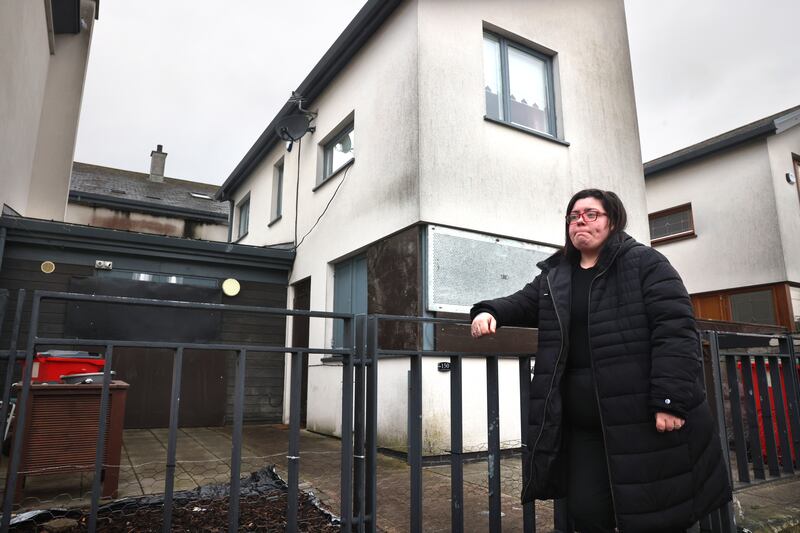
Michelle, who lives in Ballymun, was checking the house twice daily and feeding their mother’s cat Boo, who was to be taken in by Kim.
At about 8.40am on January 20th, Kim got a call from her late mother’s neighbour. “They said: ‘Your mam’s house is being boarded up’. I started trying to get through to DCC but there was no answer.”
Michelle went straight to a local council office. “I asked them not to lock up the house, to at least leave us until the end of the week, to let us do what we have to do. I was told, ‘No. It’s our property’.
“I went away and calmed down. I went back. They said it had to be kept sealed, but they could let us in at agreed time slots.”
Kim got to Ballymun and found steel sheeting over the windows and front door and Boo the cat “howling” inside.
Speaking to The Irish Times inside the home on Wednesday, during an agreed time-slot, the sisters were surrounded by family photos, pictures, ornaments and books. Mass cards were still displayed.
“It feels like we have to grieve on DCC’s time. We would have paid another month’s rent to be able to come in at our own pace. Instead, we have time slots,” said Kim.
“They locked Boo in the house. Boo is traumatised. We should have been notified or told what the procedure was. Even if they had said, ‘You have two weeks to clear the house’ and let us come and go then. Instead, we have the bombshell of ma dying, the cremation and then this.”
The Irish Times is aware of two other cases in Ballymun since last July where the homes of recently deceased parents were sealed up by DCC, apparently without notice to adult children.
They all said they had been in contact with the council after the deaths and had no indication they could be suddenly locked out, unable to access private paperwork and belongings. In all cases these were their childhood homes.

Councillors Conor Reddy (People Before Profit) and Gavin Pepper (Independent) are calling for “clear procedures” setting out how a dwelling should be surrendered by next of kin, to include timelines and detailing necessary paperwork such as death certificates.
“There is no clear policy on how properties should be secured after deaths,” said Mr Reddy. “Decisions are being driven by the immense pressure of our city’s housing shortage rather than any sense of compassion.”
Mr Pepper said: “There has to be a better way than this. There is no policy at the moment. It’s cruel the way families are being treated.”
Paul Dornan, managing solicitor with Mercy Law, which specialises in housing rights, pointed to a “clear gap” in primary legislation and secondary regulation setting out local authority procedures balancing families’ rights to belongings and private items, and the right of the council to take possession of and re-tenant a dwelling.
A council spokesman said: “Upon the death of the tenant each case is handled individually.
“This may involve securing the property to protect belongings or to protect the property and/or to prevent any unauthorised occupation.
“The tenants’ belongings are not removed from the property. The council offers assistance to the family, to sort and remove the belongings.”


