
The obituaries on Irish rugby are a tad premature.
Does anyone remember the loss to Italy in 2013? It ended up being Declan Kidney’s last match as Ireland coach. Peter O’Mahony finished on the wing. I was sin-binned for tripping a player. Not my finest moment, but at 23-years-old, I was still learning how to be an international scrumhalf.
It can take a couple of Six Nations championships to find your sea legs.
Anyway, back in 2013, Irish rugby was washed up. The good times had come to their natural conclusion. We would remain a nuisance to the bigger nations but the Grand Slam in 2009 was the high water mark.
READ MORE


Never again. Or so the story was told.
Joe Schmidt replaced Deccie. We gave the All Blacks a scare the following November in Dublin. Again, it fit the narrative around us being plucky competitors who lacked the skill or size to finish the job.
Turns out, this was base camp. Under Joe we immediately won back-to-back Six Nations titles and another Grand Slam followed in 2018.
And then, come 2019, we were finished all over again. Schmidt left after we failed at the World Cup in Japan. It was good while it lasted.
In camp, you watch, listen and read all these sweeping generalisations. They are impossible to avoid. You click on the juicy headline. From the inside, it always seemed like we were set up to fail. It comes with the territory but once Andy Farrell took over we had a clear vision of the next step in our evolution.

Andy empowered the players to lead the week’s preparation, as opposed to Schmidt’s brilliant airtight approach (no offloads policy, etc). That was the main difference. It was a shaky start under Andy. But then we clicked. Triple Crown in 2022. Test series win in New Zealand that summer. Grand Slam in 2023. Despite another loss to the All Blacks in a World Cup quarter-final and Johnny Sexton retiring, we retained the Six Nations in 2024.
Last summer, Ireland players and staff made up the majority of the Lions in Australia as England went on tour in Argentina. Unsurprisingly, for anyone who knows the history of Irish players after a Lions year, the squad has been rocked by injuries.
If Tadhg Furlong, Andrew Porter, Robbie Henshaw, Hugo Keenan, Mack Hansen, Bundee Aki and Ryan Baird had retired, rather than being injured or suspended, it would signal the end of an era.
We’ll see them again soon.
There is no denying what just happened to Irish rugby. Well beaten in Paris before shipping 50-plus points in both the A game against England and the under-20s down in Perpignan. It was a very bad weekend.
Honestly, the 20s worried me the most. The young fellas were physically outmatched and that could impact our ability to compete in the future.
But right now, ahead of Italy in Dublin and the trip to Twickenham next Saturday, I am not seeing the end of anything. The media are framing it as doomsday after a brutal defeat to France in Paris. This is understandable. November did not go well. The way we lost to New Zealand and South Africa has people worried about a return to the old days.
Italy are a tough side. They deserved to beat Scotland in Rome and they will come to the Aviva with surging belief. Ireland should put them away after about 60-70 minutes. That is what should happen if – and this is the challenge – the Irish pack can get to the pitch of the battle.
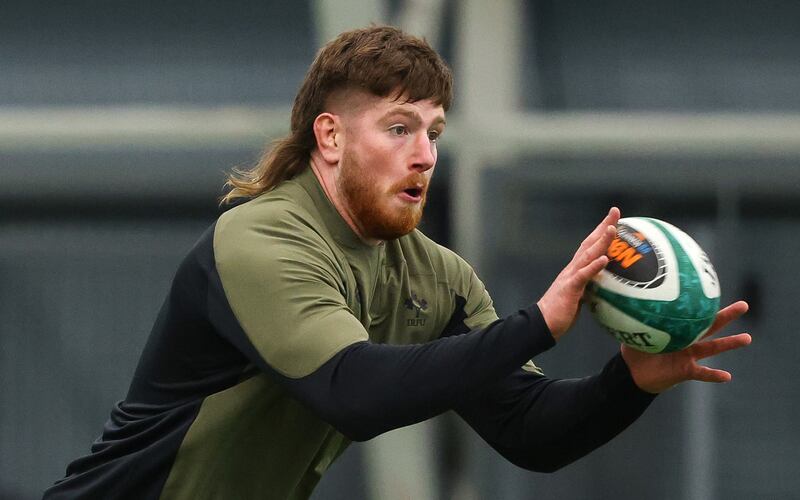
The halfbacks meeting on Monday morning would not have been as brutal as Simon Easterby’s review of the defensive performance against France.
There is not much a scrumhalf or outhalf can do when the ball carriers keep losing the gainline. The 53 negative collisions was one more than an abysmal Wales showing at Twickenham. France dominated Ireland in contact and at the breakdown. There were 41 missed tackles leading to 19 line breaks – that’s impossible to stand over.
When a team is losing the collisions, the halfbacks only have one option: send the ball into the sky. France retained nine of their 10 kicks and gobbled up 13 of Ireland’s 20.
I can see the internal review. Jamison Gibson-Park’s kicking was on the money, for the most part. Tommy O’Brien and Jacob Stockdale got into the air. The Irish wingers denied the opposing French player from a clean take. But on the ground, off bouncing ball, France scored three tries in the first-half. That’s not going to happen every week.
When a team is losing the mini-battles there isn’t an alternative to kicking. You can run it and get smashed behind the gainline. So you go up and compete.
What will need to be spoken about is the attitude in defence. Easterby will ask the pertinent questions as he freeze-frames the teachable moments. Paul O’Connell will review the breakdown in detail. Players will have to admit their physicality was way off the expected standard. Lads will be encouraged to speak about how they felt coming into the game. Small things will provide a “why” for the collective malaise.
Ireland will always produce smaller athletes than France and England. It is not a legitimate excuse. Was the ball-carrier dynamic enough in contact? Did he have two forwards either side of him, ready to clean the ruck, to guarantee quick attacking ball for Gibson-Park?
The answers will be no and no.
The Paris review won’t have lasted long. Training will have started soon after, with the starting XV to face Italy on the left and another XV on the right. This week, Cormac Izuchukwu and Robert Baloucoune appeared on the left. This will have put everyone else on notice.

Sometimes Farrell puts someone in the Monday test team who isn’t going to start the upcoming match. He might want to see the body language of a player who is potentially going to be dropped. The nine, 10 and lineout caller cannot really be tested like this. They need to know they are responsible for the gameplan as early in the week as possible.
The plan is not going to change. Tiny tweaks, sure, but it is set for the championship. Execution and intent are the live issues to be solved.
The coaches will hand over the reins to the team leaders. The 10 – be it Sam Prendergast or Jack Crowley – has to be a leader. Same goes for Jamison and Craig Casey. Halfbacks run the week because on Saturday afternoon, they run the game.
The team will have been announced the next day. Usually on a Tuesday. But we’d have a good idea from the Monday session if there were going to be changes.
Players will be hurting. Egos have been damaged. You simply have to get over it. Andy Farrell will pull up anyone moping about the hotel on Tuesday or Wednesday.
“Here, we are in this together.”
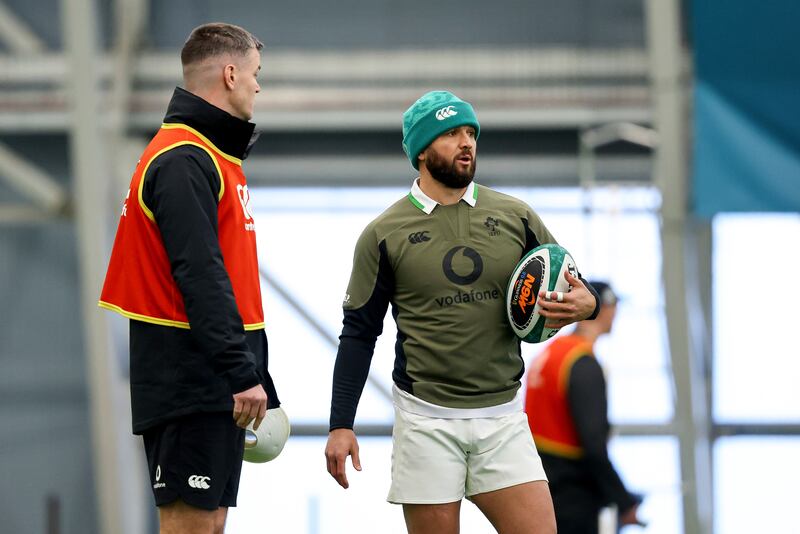
Some of the younger players need to hear this. They have to understand the importance of preparing for what comes next. Defeat in France can easily turn into a disastrous campaign if small issues are allowed to fester.
Everyone on the outside is playing a familiar tune. Not big enough. Ageing team. Kicking too much. The 10 debate rages on.
Try telling James Ryan, Jack Conan and Nick Timoney they lacked physicality off the bench last week. Or question Joe McCarthy’s ability to dominate at this level. Joe is Ireland’s physicality leader. He wasn’t that in Paris. Trust me, he is aware.
The same goes for Tadhg Beirne, Caelan Doris and Josh van der Flier, who were outplayed by their opposite numbers.
By selecting Izuchukwu at blindside and Baloucoune on the wing, the Ireland coaches cannot be accused of standing still. It is highly unusual to regenerate the team during the Six Nations but both Ulster players have earned the opportunity.
The changes alter the dynamic of the group, in a positive way.
I loved being in Ireland camp under Farrell. Win or lose, it is the best environment for an elite athlete to get better every day. Even at 35-years-old, I was adding bits to my game and I was being challenged in a way that didn’t damage my confidence.
Last week was not as bad as it can get. Wales being humiliated by England, with George Ford in complete control of proceedings, is not a road Irish rugby wants to travel down.
Job one: win the collisions against Italy.