

“I arrived in Dublin and they had a team of bodyguards,” Amy Berg says. She laughs, but there’s a touch of ice in her tone.
The film-maker is reflecting on her turbulent experiences promoting her first film, Deliver Us from Evil, a documentary from 2006 about the Irish paedophile priest Oliver O’Grady. “The film festival had a team of bodyguards. There was so much anger in Dublin over that film.”
Deliver Us from Evil had the rare distinction of making it on to both the Oscars shortlist and Liveline. O’Grady, who had abused dozens of children in California in the 1970s and 1980s, was captured on camera chatting about his preferences, and extending his arm to indicate his preferred height of child. (Deliver Us from Evil lost out at the Academy Awards to the environmental opus An Inconvenient Truth.)
Berg, a former TV reporter, has always had a nose for a story and a yen for correctives. “I did a lot on systemic abuse and corruption in the first 10 years of my career,” she says.
READ MORE


She directed the 2012 documentary West of Memphis, an examination of a failure of justice in the cases against the West Memphis Three, a trio of teenagers convicted of murdering three eight-year-olds in the early 1990s.
Berg also made The Case Against Adnan Syed, the 2019 docuseries about the murder case that rose to prominence in the first series of the Serial podcast, in 2014; and, more recently, Phoenix Rising, an HBO documentary about the actor Evan Rachel Wood and her former partner Marilyn Manson, the singer, whom she accused of abusing her.
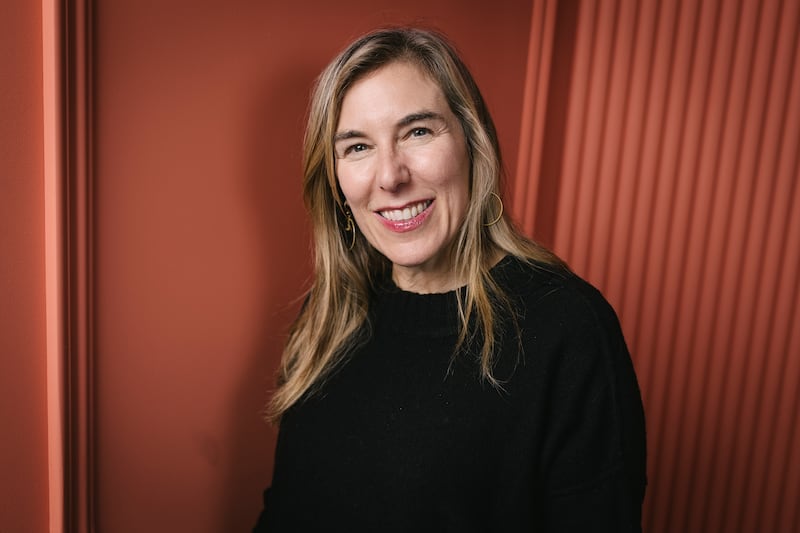
Among those hard-hitters, Berg nurtured an interest in a different kind of story. Wearing large-framed glasses and a red top today, and with an easy, chatty energy, the 55-year-old director is quick to admit her moving new documentary about Jeff Buckley is with us because of the music-obsessed Los Angeles teen she once was.
Listening to the singer’s debut album, Grace, in the 1990s, Berg was awestruck by his power. “For me, the thing I’m most jealous of is when people have never heard his album and the first time they get to listen to it,” she says. “It takes you to another place.”
The young Buckley, who was blessed with a four-octave range, didn’t easily fit within grunge, soul or any other playlist category. As Joan Wasser – aka the musician Joan as Police Woman, a former girlfriend of Buckley’s – put it, when she listened to him she heard the vocals of Nina Simone.
Intriguing, unpredictable and heartfelt, Buckley became most famous initially for his cover of Leonard Cohen’s song Hallelujah, but his goal was to push forward as a songwriter, reshaping ideas to his own chameleon-like ends. “With comparisons, I’m not understood,” he said.
The son of the folk luminary Tim Buckley, the young Jeff never really knew his father. His mother, Mary Guibert, met Tim when they were students in French class in southern California. She became pregnant at 17. “I knew from the fifth month I was never going to see Tim again,” she says.
Through sepia photos, archival footage and intimate interviews, Berg traces Buckley’s early childhood in Orange County, California, and adroitly captures his sense of abandonment. One reporter asks Buckley, early in his career, “What do you think you inherited from your father?” The usually genial singer snaps back, “People who remember my father. Next question.”
When Tim Buckley died, at 28, of an overdose, obituaries didn’t mention Jeff, who was eight at the time, although they did refer to Tim’s adopted child and his new partner.
Looking back, the singer’s mother doesn’t sugarcoat the fragility of their existence. “Jeff and I raised each other. He would put his hands on my face and say, ‘We’re going to be okay, Mom, right?’ I’d say, ‘Yes, darling, we’re going to be fine.’”

Women are at the heart of Berg’s unspooling narrative: Buckley’s story is told largely by his mother, by Wasser and by another former girlfriend, the artist and animal-rights activist Rebecca Moore, the likely inspiration for several songs on Grace. (“Too young to hold on / And too old to just break free and run,” he laments on Lover, You Should’ve Come Over.)
In a cultural landscape where talking heads are often male, the centrality of women on camera provides a refreshing change.
It’s a nod, Berg says, to Buckley’s feminism. “When I first started living with the material, I found a really strong feminist voice in Jeff,” she says. “If you were around during the 1990s, you know it wasn’t the most feminist time in music. He had that openness in his heart to be in touch with his feminine side. I think he was fluid before that was a term. So I chose to slant it that way.”
Berg first tried to get rights from the Buckley estate in order to make the documentary as early as 2006, but Buckley’s mother hesitated. Berg was persistent, coming back “multiple times” over a decade, then spending five years in production.
“Passion is hard to kill,” the director says. “I wanted to do it from such an early point in my career, and Mary gave me some indication that she might be willing to work with me at a later date. So there was hope she would eventually change her mind. She shared some of the archive with me, and some of the voice messages never left me.” (In one, which Buckley sent his mother just before his death, he told her: “Anyone can be famous, but it takes a real spirit to raise a kid ... I love you.”)
Brad Pitt proved an unlikely saviour on the project. When Guibert decided, in 2019, that she was ready, and handed Berg the keys to the archive, it helped enormously that the actor had already courted Guibert in an attempt to make a biopic about Buckley.
His interest meant he’d paid to digitise Buckley’s archival material in the early 2000s. “There wouldn’t be a movie if it wasn’t for Brad Pitt,” Berg says about the star, who is credited as an executive producer. “He restored and digitised everything and made sure there was a safe keeping of Jeff’s world. So thank goodness for Brad.”
She laughs. “He’s in Dublin. Call him!”
It’s true: in a twist of fate, Pitt is in Dublin as we speak, filming in Co Wicklow – although, sadly, I appear to have mislaid his number.
Berg hopes to catch up with the actor when she lands in Dublin for a screening of the film. For her, there’s a lovely synchronicity about the documentary, which premiered at Sundance Film Festival in 2025, securing Irish distribution.
“It’s a full-circle moment,” Berg says. Buckley “had a real liking for Ireland. He played at Trinity College. And he had toured with The Commitments before that, as a guitar tech.”
In New York, Buckley’s beloved East Village cafe and music venue, Sin-é, where he washed dishes as well as playing sets, was owned and run in the early 1990s by two Irishmen, Karl Geary and Shane Doyle.
U2 make a fleeting appearance in the documentary, as do a number of musicians from Buckley’s band, among them the drummer Matt Johnson and the guitarist Michael Tighe.
Tighe talks about Buckley’s mental state in advance of the recording of what was meant to be his second album. “He was very hard on himself,” Tighe says. “Sometimes I felt there were good and evil forces at play within him.”
Buckley drowned in 1997, at the age of 30, on the day his band were flying into Memphis to record the new album with him.
He’d entered the water in a harbour off the Mississippi river, according to the city’s police department; he’d been wading and swimming, fully clothed, then disappeared after a boat passed by, creating a wake. The water’s surface was calm that day, but there can be a strong undercurrent.
Despite police and the harbour patrol searching for him with helicopters, scuba divers and foot patrols, his body wasn’t found for six days.
The documentary deals with lingering questions about his death by relying on graceful animation and spare commentary to relay the known facts while leaving a certain ambiguity.
“I wanted people to know he didn’t overdose, that he didn’t have drugs in his system and that it was an accident, but that there’s conflict around that, it’s not as cut and dry as that,” Berg says.
She also wanted to inject a larger, philosophical sense into the story, reflecting on Buckley’s enduring renown. “I looked at it like he was alive. I wanted to make his death feel like he’s just with us now. So that’s how the end is played. I wanted it to be an uplifting story about an artist and to encourage people to make their own art.”
More than 12 million people listen to Buckley every month on Spotify, and songs such as Lilac Wine, Everybody Here Wants You and Lover, You Should’ve Come Over win new fans every day.
“His legacy has grown so much,” Berg says. “He’s bigger now than he was when he was alive. For hundreds of millions of people on TikTok, Jeff is still alive.”
Berg is currently making a documentary about Chris Cornell of Soundgarden, another musician who was deeply influential in the 1990s. Cornell, who appears in the documentary, and Buckley were friends. He died in 2017.
[ Chris Cornell: the Greek god of grunge who blazed his own pathOpens in new window ]
“I remember reading the article that deemed it a suicide, and it said he had a number of medications in his system. I was, like, ‘That’s weird,’” Berg says. “How do they know it’s suicide if he had all this medication in his system?
“That opened the door to me to the mental-illness conversation. There’s such an arrested development in male mental health. That’s what I’m looking into. Those are the threads I can pull.”
It’s Never Over, Jeff Buckley is on limited cinema release


