Naming Stakeknife, the British army’s top IRA agent, would help recruit more Catholics to the Police Service of Northern Ireland, Westminster MPs have heard.
Jon Boutcher, PSNI chief constable, told the NI Affairs Committee on Wednesday that it was his view the double agent’s identity will be reported because of the “compelling” arguments to do so.
It would “help move society forward”, he said.
The North’s most senior police officer was giving evidence on Operation Kenova, the £47 million (€52.6 million) investigation into the activities of Stakeknife, published last month.
READ MORE


Stakeknife is widely regarded to be west Belfast man Freddie Scappaticci but he was not named in the final report due to the UK government policy of “neither confirm nor deny” on sensitive security issues.
Head of the IRA’s notorious internal security unit, known as the nutting squad, Mr Scappaticci denied he was the high-level mole up until his death in 2023.
Mr Boutcher, the former lead officer of Kenova, told MPs that he believed the approach to the nine-year investigation had “changed the weather” on Troubles related cases and “shone a torch” in a way that “hadn’t happened before”.
Expressing his frustration at the UK government’s refusal to name Stakeknife, he said he had contacted Northern Secretary Hilary Benn since Christmas about the issue.
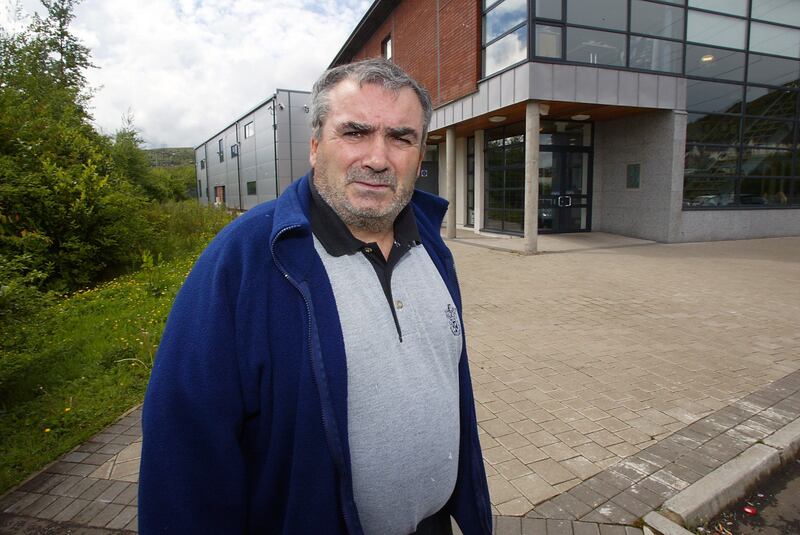
“The nationalist community see this as a continuation of ‘what’s always happened’, protection of wrongdoing by the state”, Mr Boutcher told the committee.
“I can say categorically, that the families I’ve spoken to, I’ve explained how much the state did to protect their loved ones. But in this instance, we’ve got it wrong.”
Mr Boutcher said the PSNI are launching a recruitment drive this week.
The number of Catholics joining the force hit a record low in 2024, representing just over 17 per cent.
“I am desperate for this society to move forward. All communities, not just the two traditional communities,” Mr Boutcher added.
“And to help society move forward, to help me get Catholic officers into the PSNI, we need to start making some difficult choices.”
Appealing to Mr Benn, he asked that he “listen to other people” with “considerable experience, understanding and more accountability in policing” than in the intelligence agencies.
Also appearing before the committee was Iain Livingstone, the former head of Police Scotland, who replaced Mr Boutcher as the lead officer for Kenova in 2023.
Mr Livingstone said he was satisfied with the “answers given to victims and families” but felt frustrated at the lack of prosecutions regarding Stakeknife.
The report found the agent was linked to 14 murders and 15 abductions, and that his protection outweighed the life of a victim.
“In some ways I felt it could have achieved a lot more ... there was inevitable frustration those cases were never brought to court and tested in the public domain,” Mr Livingstone said.
He said it was for the “greater good” to name Stakeknife and that it would not undermine UK intelligence agency security policies.
British agents need to know “there are limits on how you can conduct yourself,” Mr Livingstone told the committee.
“Grotesque murdering, terrorist torturing and criminality certainly goes past those limits,” he added.
Asked if he thought it was a mistake to recruit Stakeknife given the scale of his offending, Mr Livingstone said his initial recruitment was “legitimate” based on “what we know”.
“I think it’s thereafter, as he’s risen through the command structure of PIRA, that there wasn’t enough oversight, there wasn’t enough checks and balance, and nobody stepped back and said, ‘hang on, this guy’s now gone beyond any level of decency or proportionality’,” he said.