
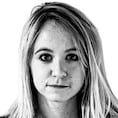
Dr Mustafijur Rahman is overwhelmed. Each day, the tuberculosis and chest medicine specialist says, eight doctors in his hospital have to see 800 patients, who travel from locations far and wide to reach the National Institute of Diseases of the Chest and Hospital in Bangladesh’s capital city, Dhaka.
“It’s impossible,” he says. The patients present with asthma, lung cancer, bronchitis, pneumonia, chronic obstructive pulmonary disease – “all diseases which are closely related to environmental pollution”.
Dhaka’s air quality regularly ranks among the worst in the world. A recent report by the United Nations Department of Economic and Social Affairs said the megacity – which it assessed as having close to 37 million residents – could become the most populous city globally by 2050.
Hundreds of thousands more people are thought to move there from other parts of the country each year, a significant number of whom are fleeing climate-related incidents.
READ MORE


Bangladesh – with its low and flat land – is considered by climate scientists as one of the world’s most vulnerable countries to climate change. It has a population of about 174 million people in an area less than twice the size of the island of Ireland.

Despite the impact of pollution on the ground, Bangladesh only emits about 0.3 per cent of global CO2 emissions from combustible fuels, according to the International Energy Agency. Other estimates suggest the amount of emissions per person in Bangladesh is almost 10 times lower than that of someone in Ireland.
Yet the stress it is under could cause Bangladesh’s health system to “completely break down” if environmental pollution continues to worsen, says Rahman.
He says his hospital’s budget from the government is extremely low – it receives 2-3 taka (1-2 cent) per patient – and improvement of infrastructure and the overall health system is desperately needed. About 30 per cent of patients in need receive care through the state, he says – and even then they still have to pay some costs. Others are forced to turn to private providers, sometimes racking up huge debt. This forces some to travel abroad in search of ways to pay it back, with multiple Bangladeshis who paid smugglers to cross the Mediterranean to Europe in 2024 telling this newspaper they made the journey to escape debt collectors, after borrowing to pay healthcare costs for family members.
Last year more than 20,200 Bangladeshis crossed the Mediterranean Sea to Italy, making them the most common nationality to make this dangerous journey by far.

Nasir Vddin, a father of three originally from southeast Bangladesh, is one of those waiting in a long queue to see a doctor. He had a burning sensation in his chest for years but only confirmed the problem when he got X-rayed as part of an application for a Qatari labour visa – the result meant he was rejected. He next had to go to a private clinic to get a PET-CT scan, with no idea how much it would cost. His doctor told him the “dust” from the main road he works on could have contributed to his illness.
“Political commitment is very important,” Rahman says. “Dhaka is an overcrowded city. People [come] here for a temporary job. They have low economic status.”
He says many live in slums, often beside industrial areas, where “the sewage system is not sufficient for standard living” and there is a “contamination of infections from one to another”.
Brickfields around Dhaka pose a health hazard, as do garment factories and tanneries, with fumes sent out into the air and hazardous materials thrown into the rivers, polluting the water. The number of patients triple or quadruple in winter. Every day 13 or 14 patients die in the hospital, he says. The deaths usually occur among the in-patients, who are cared for by separate staff.
Rahman sees a lot of children suffering from bronchitis, pneumonia and asthma. One in five has tuberculosis or related complications – often drug-resistant.
He says efforts should be increased to separate industrial areas from residential ones, and Dhaka’s residents should be educated more about personal hygiene, sanitation and decreasing risks.

Elections will take place in Bangladesh on February 12th – the first since long-time prime minister Sheikh Hasina was ousted in August 2024. Rahman says the new government will need to do “proper planning” and make sure to put the “right person in the right place”.
“The political unrest in our country is making this more difficult,” says Dr Md Safiun Islam (50), an assistant professor of respiratory medicine who also works at the hospital.
He says the number of patients has “exponentially increased” in five years: they sometimes have a queue of 20-30 people waiting to be admitted to the ICU. He says having a child on a ventilator following an asthma attack was a rare event 20 years ago but now it’s “frequent”.
“Sometimes we lose the patient because we can’t provide adequate support,” says Islam. He predicts a “disastrous” increase in cases in the coming years.
Islam says employment choices forced by economic necessity see many Bangladeshis working in low-paid jobs such as coal mining, construction, in the garment industry, brick making and ship rigging, which carry serious health risks they might not always be aware of. Controlling “pollution-producing sectors” is “an emergency,” he says. “Individual awareness that this is harmful for our next generations needs to be integrated in the educational programme.”
Other patients work in low-paid jobs abroad and don’t get medical treatment until they return to their home country for a variety of reasons, by which stage their diseases are very advanced, he says.
He asks for worldwide co-operation on dealing with environment-related healthcare issues. “We need more from other countries, they have the ability to help us.” But he adds: “If we don’t care about ourselves nobody will care.”

Raahat Alam assisted with this report.
- Supported by the Simon Cumbers Media Fund


