
Could you, off the top of your head, guess the population of Killarney? While plenty of politicians probably wouldn’t have such specific Kerry trivia to hand, there was a confident sense in Leinster House on Tuesday that it is definitely less than 20,000.
In the grey drizzle of Merrion Street early on Tuesday morning, Minister for Enterprise Peter Burke revealed to journalists standing outside Government Buildings that he had U-turned on a significant policy decision that would have seen a crackdown on Airbnb-style short-term lets in small Irish towns.
The Government had previously planned to restrict such holiday lets in towns with populations of more than 10,000 – a measure that is largely motivated by an anxiety to increase desperately needed private rental accommodation in Irish towns.
Now, Burke said, the restrictions would apply to much larger towns, with populations of at least 20,000 – in effect lifting the threat of regulation from potentially thousands of Airbnbs across the bucolic little towns of Ireland. The Government has, in this instance, chosen the commercial interests of tourism over the social case for more housing supply. Burke said as much when he told reporters he was motivated by the fact that many towns in Ireland don’t have enough hotel accommodation to meet tourism demands. “And short-term lets are key to providing that capacity,” he said.
READ MORE


Why the change of heart? Well, it’s no secret that Independent Minister and, more importantly, Kerryman Michael Healy-Rae really did not like these proposals. He wrote to Taoiseach Micheál Martin and Tánaiste Simon Harris late last year, describing the proposed regulations as “devastating” for rural Ireland. Was this change in policy a sop to Healy-Rae? Burke said no, that it had followed consultation with the tourism industry.
[ Healy-Rae urges ‘serious rethink’ of planned short-term lets crackdownOpens in new window ]
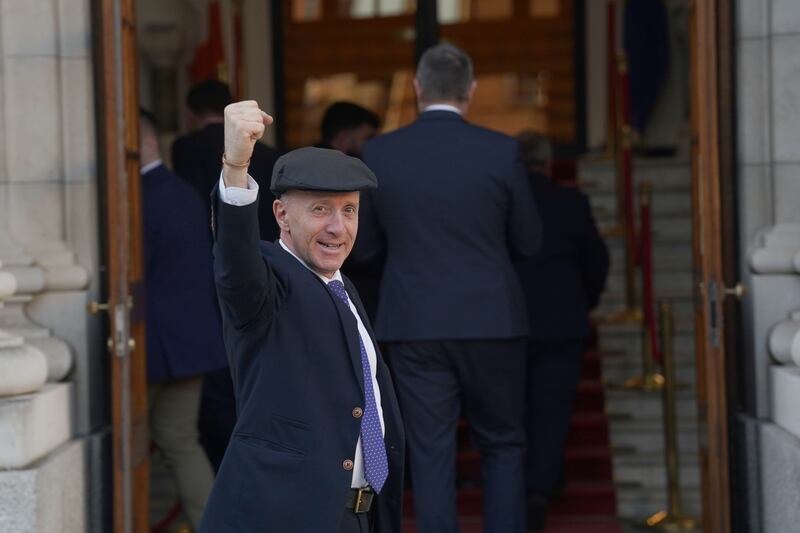
Unfortunately, around about the same time as the Minister’s demurral, one flat-capped maverick was publicly taking credit for the policy on social media. “I’ve been working hard at Government level to make sure changes to short-term letting rules are fair, balanced and grounded in reality,” Healy-Rae wrote on Instagram, under a picture of himself, a Kerry landscape and a declaration of the importance of “independent rural voices” in Government. “Today’s announcement reflects that work.” Healy-Rae, who tagged some self-catering lobby groups in his post, said “housing is a national priority, but so is protecting livelihoods in rural Ireland and this strikes a better balance between the two”.
The population of Killarney is more than 14,000, by the way. There are a total of two properties publicly listed for rent in Killarney at the time of writing, compared to about 300 Airbnbs – according to a rough map estimating function on the website of the popular letting platform. Tralee, which had a population of more than 26,000 in the last census, will still face some form of regulation.
Irish towns which will now not face the new regulations on short-term lets include Castlebar (five properties to rent, more than 30 on Airbnb), Westport (two properties to rent, more than 200 on Airbnb) and Buncrana (zero properties to rent, more than 30 on Airbnb).
The Government argues that the measure helps small towns which are attracting tourists and the associated economic boon that they bring, but which don’t have enough hotels to accommodate them. The Government would also argue that over half of Ireland’s short-term lets are in the country’s five cities, which will be regulated. Burke claimed this would help increase supply where the housing crisis is most acute.
Conor Sheehan, Labour’s spokesman on housing, said it was “very clear” that independents such as Healy-Rae had “won the argument on this one”. He rejected claims the measure will help rural tourism, and suggested that the only reason some towns were lacking tourist accommodation was because the Government had contracted too many hotels to run as accommodation centres for international protection applicants.
[ Planning requirements for short-term lets will see them ‘fall off a cliff’Opens in new window ]
“The State needs to build up its capacity in terms of IPAS accommodation, and it needs to do it in areas where there are facilities and services for people to allow some of these hotels to revert to being hotels. But at the same time, there are many towns with populations of less than 20,000 that have significant issues with their private rental market,” he said.
On the other side of the argument, some feel that even raising the 10,000 cap to 20,000 still isn’t enough. Independent Ireland’s Michael Collins said he is still against plans to require all short-term lets to be planning permission compliant and on a new Fáilte Ireland register.
According to Collins, who hails from Mizen Head in Cork , his own mother effectively “did Airbnb in the 1970s”. “Because she wanted to put bread and butter on the table,” Collins said. He also argued short-term letting is a women-led industry.
“They are going to annihilate the tourism industry. When, in the name of God, are the Government going to stop hitting rural people? Because yes, we do need houses, and we are fighting for houses for our people, but do not strike the tourism sector to sort the housing crisis in this country,” he said.