

Less than 18 months ago the then minister for housing Darragh O’Brien turned up to open the Cookstown Lane development in Kilternan, south Dublin.
The 22-home estate, developed by Clanmil Ireland housing association, was opened on a sunny June day in 2024. It was built as an exemplar of social housing and the homes have been allocated to families on the Dún Laoghaire-Rathdown County Council waiting list.
Today the development is empty. All the families have been evacuated following the catastrophic flooding which resulted from Storm Chandra two weeks ago. The Loughlinstown river, which flows behind their houses, burst its banks and the torrent of water collected outside their homes.
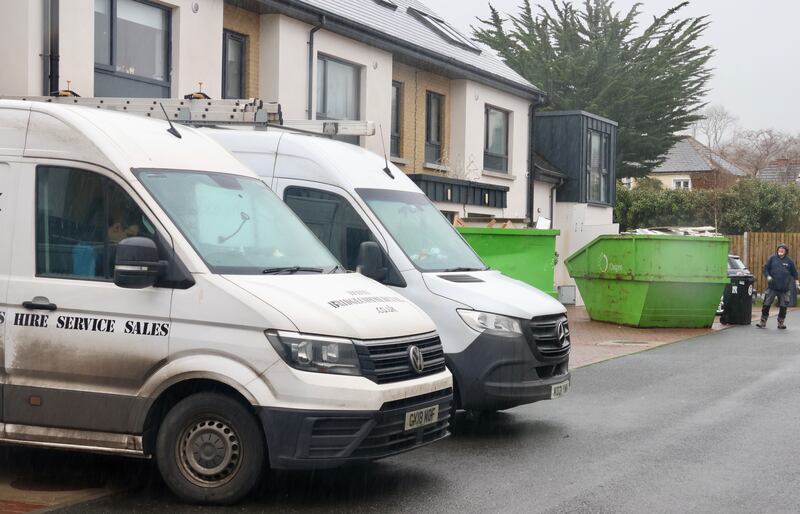
There are skips outside most of the homes and a couple of children’s bicycles are all that suggests this was a lived-in estate.
READ MORE


There are four workers’ vans outside. The workers are taking out the plasterboard and skirting boards from all the houses. On one side of the cul de sac, houses flooded to a depth of seven centimetres, on the other side 10cm.
The Loughlinstown river is several hundred metres from the estate, but Cookstown Lane, being the lowest part of the estate, was worst affected.
Local Labour councillor Lettie McCarthy said all the families in the estate were now living elsewhere and it may be months before they can return.
“None of them got accommodation locally. It’s like talking to somebody after a death. There is disbelief and shock,” she added.
“Some of them have children with additional needs and they were attending St Joseph’s in Shankill. It could be several months before they are back. One couple said [they] were saving for furniture and got it in before Christmas and now it is destroyed.
“We are all horrified by the heavy rain, but this will affect them for months.”
The families are being managed by the housing association, which did not respond to a request for a comment.
The foothills of the Dublin Mountains were some of the places worst affected by Storm Chandra. Ticknock, Kilternan, Stepaside and Enniskerry were all flooded.
“This shouldn’t be happening. We should be able to cope with this. We have a lot of work to do at council level and we have to put a plan in place,” she said.
“We have to acknowledge the work that the council did clearing gullies and opening the roads again.”
Johan Keating’s home on Ballybetagh Road backs on to the Cookstown Lane estate. He said the Loughlinstown river has burst its banks four times in his lifetime.
He moved into the home built on family land in 2010. The river flooded a year later, but the damage was minimal. Since then a lot of housing has gone up around him. “There is so much building in the area that there is nowhere for the water to go,” he said.
“It came through off the fields, through everyone’s property and flowed like a river to find a way out.”
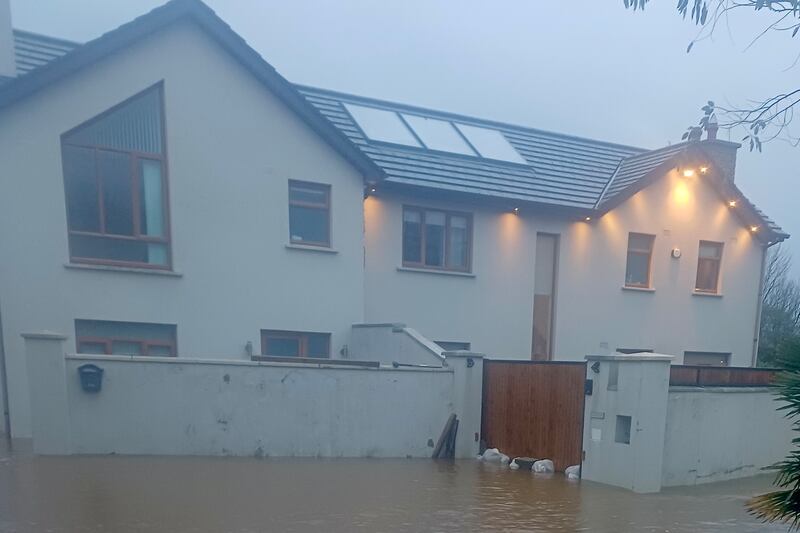
All the skirting boards, the oak doors, the couch, kickboards and a new robot vacuum cleaner were destroyed. The water was 20cm deep in places. The house flooded with sewage which had nowhere to go because of the rain and it left a wet, dirt-stained floor behind.
“It’s been a nightmare. We are still trying to assess the damage.”
Another badly affected estate was Aikens Village, a private development in Stepaside. A river running along the estate completely flooded the main road which runs alongside the boundary of the estate.
Three ground-floor apartments are empty and the residents have left. There are still sandbags outside the homes that were badly damaged by the flooding.
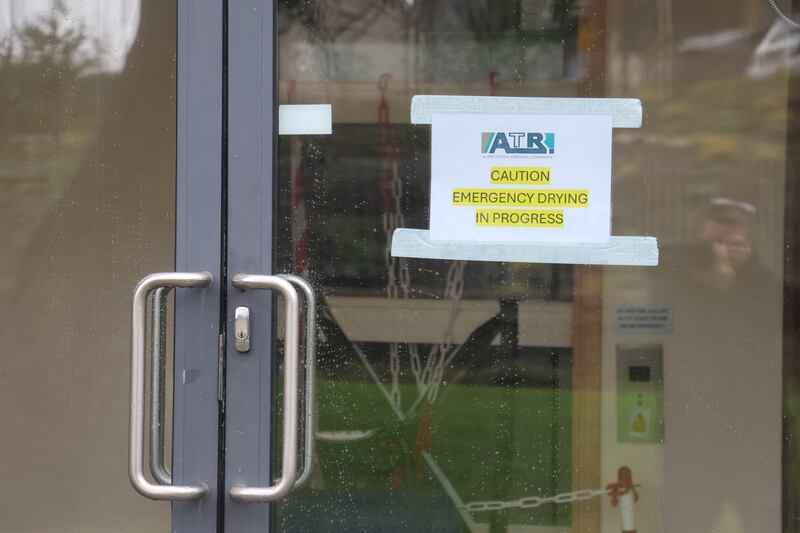
Inside the dehumidifiers are still running and most of the furniture has been evacuated from the homes.


